Pages

Tuesday, June 5, 2012

TWIS #15


This is my group mates working together to try to make it stand
 This week in science we did several things. They consist of our third and last marshmallow challenge. It went pretty well for my group compared to the last times because we knew what not to do. still even at that we struggled to make a good structure but its better than before. Also we did a video of ourselves to our 10th grade teacher. I made mine nice by going to the roof instead of the staircase.

                                      This week in science i learned that a good structure has lots of support from tape. my group used almost a full roll of it. we also learned a lot my ability to work in groups changed over the 3 different times i did the Marshmallow Challenge. i am better at working in groups now because i'm not nervous anymore about speaking aloud. i do not like working in large groups just because i'm more independent and like to work on my own other than that its pretty fun.


This is how we communicated without talking
This is our second tower which was way taller than the first


Wednesday, May 30, 2012

This Year in Science - 10th Grade Intro Video


My name is Sebastian, I'm in the 9th grade and in a few months i'll be in 10th. I have some personal interests such as sleeping, laying on my couch, eating and other fun things. Then theres my academic interests which consist of not failing. The only thing thats grown in science this year I'd say in my vocabulary and my lack of interest in plants because those things are just boring. I don't see when im going to be using some of the words i learned in science since im not planning to be a scientist or even a science teacher. I struggle in large written packets because reading isn't really fun to me unless im extremely interested in the subject. I don't know what i want to tell my science teacher for next year i guess they're just gonna have to find out more of me when the see me. 


Monday, May 14, 2012

TWIS #11

         This week in science we did a lot of things such as we went to the park to look for rocks and small twigs to put in our spider habitat tank that david gave to us. I also received worms and little bugs so the spider can eat them. We also made annotations on a google doc of what are the cons and pros of an environment. Also we used our prior knowledge on some words we learned a long time ago. Before we actually went we discussed in groups what should go in the tank and we made a drawing of it but, it didn't work out as we planned. We just got random things that we found.
         I learned that people dont like when random kids go to the park and dig up the dirt around the park even though we put it back. I think it was a fun experience since we got to go out of the class room. I also learned about little creepy green bigs that I found by just digging on the surface and then the big worms are deeper down.

Friday, May 11, 2012

TWIS # 13


 If we were to leave these spider habitat tanks sealed but removed all of the plants, then they would get no glucose, photosynthesis, or oxygen. Then the spiders would produce too much carbon dioxide and die from lack of oxygen and energy. 

Monday, May 7, 2012

TWIS #12

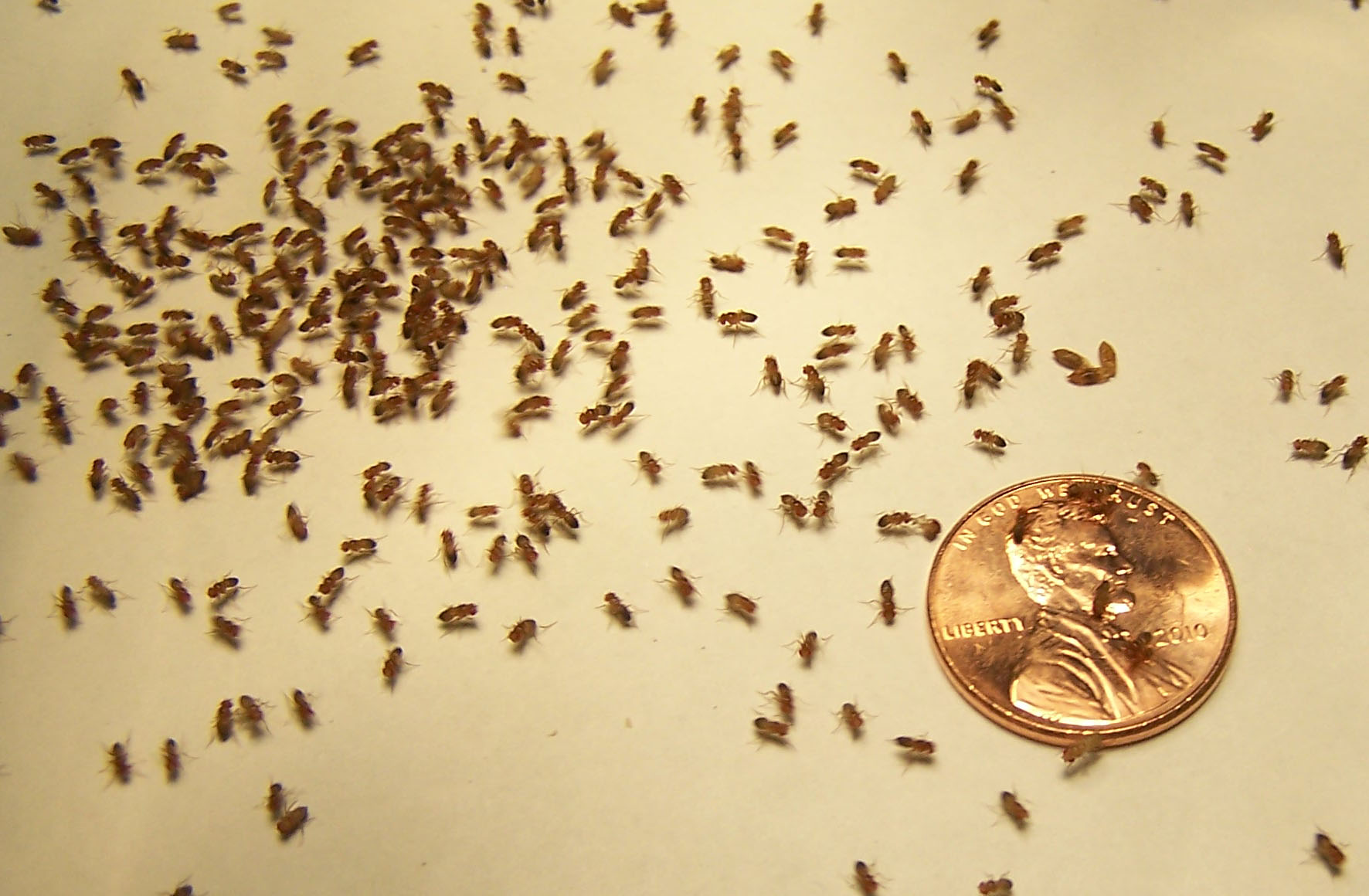
This week in science we got the spider in our tank. It was a cellar spider. Then we got flightless fruit flys that are genetically engineered to have really small wings that are not used for flying. Also we made a booklet to keep track of the spiders and we drew on it then wrote the definitions of mutualism, parasitism, and commensalism. Timothy and me put 6 more spiders in the tank after our first one died to see if they would fight to the death but they actually stay a little bit apart from each other.


This week in science I learned that the spiders aren't really fighters. Also I learned that the spiders like high places and they even though are in te same tank are somewhat territorial. By that i mean it likes to have some space to its self. If another spider tries to go there it looks like its going to attack it. Then i learned they dont really like water because we dumped some food in the water and not one spider went for it. Something i want to know is how the first spider died and why that spider didn't make webs at all.

Tuesday, March 27, 2012

TMIS #10

           This month in science David was absent for a week and Jaime taught us with another lady. Durning the week we had Jaime as a teacher we did group working testing different water from different laces. We tested for hardness and chlorine. We also worked on some work sheets. When David got back we started to do a human impact project and now we're working on a campaign for a t-shirt. Some people cam every friday to guide us through the project.

          I can't really remember much of what we did the whole month but i learned of water usage by taking a survey around our school. I learned that most people in the lower east side of manhattan dont recycle. People were not stoping to take our survey but we got like 3 people to take it. Also i learned how to test water for minerals, waste, and chlorine.

TWIS #9

            This week in science i dissected a mouse. its way different than dissecting a cricket because the cricket has a hard exoskeleton and not much organs. the mouse on the other hand, has soft skin and a lot more insides. also the mouse doesn't have bone it has cartilage that takes the place of that. thats an adaptation so it can go through tight spaces with ease and not break anything.                
            I learned that from all the jumping they do, frog's leg muscles r huge compared to the rest of there body. but deep inside all that muscle there leg bones are as thing as tooth picks. also its skin isn't so easy to cut. even though they looked slimy and squirmy they're actually rough. Also i learned that you can tell weather the frog is male or female by just looking at their thumbs. the aha moment i had was that i cute straight through the brain of a mouse without even realizing it.                                                      

TWIS #8

In this week in science we learned some vocabulary such as dorsal and ventral views which are the front and back view of the specimen. on this specimen its posterior is at the back end of it and its distal to the anterior which is the head of the specimen. This Crickets environment are grassy places. If my organism needed to adapt to a watery place it would need gills and webbed feet or fins because its small thin legs wont push it far in water.                                                                                          
This is a ventral view of a Cricket.
Also we learned about the parts or a cricket and dissection. Also the tools needed to dissect. While i was dissecting i didn't know the organism had an open circulatory system which means it doesn't have veins so when i cut it all its fluid leaked out. It was an aha and an ew moment.
This is the side view of a Cricket.
     

Wednesday, March 21, 2012

Human Impact Ad Campaign

In this image im showing our Water You Gonna Do When Its GONE? campaign. It signifies how over the years pass our water gets dirtier and drinking water can get dirtier too.

Monday, March 5, 2012

New York rulings could embolden towns to ban fracking

            In this article the author talks about how NY banning fracking encourages other small towns to do the same. They express all of this in boring law terms. The author writes " New Bans a MISTAKE" so I'm guessing he thinks the thought of fracking is good if he thinks that banning it is a mistake.The author had some statistics but didn't even have a graph or a picture so he pretty much wined. The author didn't state what side he was for but by some wordings i think he was against banning fracking.
            What i thought about this article is that it was expressed in really boring words. I barley understood what i read and it didn't attract my attention. I'm not sure weather i agree or disagree with the author because his point wasn't clear but what i do agree with is that fracking isn't good. I'm still wondering why the author didn't even include a picture or graph.

Tuesday, December 20, 2011

Classification challenge

  • Animalia Kingdom (means its an animal)
  • Arthopoda Phylum ( means it has an exoskeleton and jointed feet.) 
  • Insecta Class (group of insects that have a 3 part body)
  • Hymenoptera Order ( means heavy wings)
  • Family Vespidae
  • genus Microstigmus
  • Species hymenopteran


    Tuesday, December 13, 2011

    Cricket Investigation

              We want to know if the crickets would prefer to eat fruit or vegetable. My hypothesis is that the crickets would prefer the fruit because its sweeter.Crickets ears are located on the knees of their front legs. Crickets can see different directions at the same time. Also crickets in the wild have a life san of less than a year. Female crickets do not chirp. Male crickets cause the chirping sound by rubbing his left wing against the upper edge of his right wing. 

    experiment setup 
    experimental data
         I set up the tank by placing cut up apple on one corner of the tank and  cut up celery in the opposite corner. Then we placed the cricket in the middle and saw were it went. 
         In the data part i followed were the cricket was going in the tank. 
         I can infer that my hypothesis was right because even though the cricket didn't stay on apples it was there longest. It would go to the celery but just come back to the apple so I can see that it prefers the apple more that the celery.                 


    Friday, December 9, 2011

    TWIS #6

                This week in science we worked on a dichotomous keys. On the 7th we did two different ways of asking dichotomous questions. We were trying yo figure out what flavor jelly belly's we had. The two different ways were the flow chart style and the list style. Also on monday we worked on a project to see if crickets like damp or dry surface by watching and timing what they did.


    To the left is a picture of a dichotomous key example.

                I learned this week how to do a dichotomous key the list style. I always thought it would be complicated and I have seen it done before but i never actually tried it. Also i learned that crickets seem to becalm insects and don't really move much unless they feel danger. I had an aha moment when we did the flow chart because i realized how easy it really was.

    Friday, December 2, 2011

    TWIS #5

                This week in science we made a small rocket for a warm up and then started towards the bigger project. We finished the rocket challenge experiment. I didn't really think they would fly as far as they did. My IV was if the shape of the wings would change the distance and it did. The one with the thin long fins flew further and the one with the fat wings didn't go as far. Also we re-did the marshmallow challenge and even though we had already done it we still didn't finish it good. After that we studied crickets and made sketches of them.

                I learned this week that crickets can eat each other. Im still curious about how big crickets can actually grow but I am not convinced that the picture there can be real.

    Friday, November 4, 2011

    TWIS #4

    This week in science we picked out parts for the plant investigation #2. Then we all did our parts and if we finished we helped wit other parts. Then after that we completed it on google docs. We also added a picture of what the plants look like now. After the first day of the plant investigation write up , Jamie sent each of us some responses and we tried to correct everything she put dow.

    This weeks AHA!!!!!!!!!! moment was when we saw the plants last and the ones left in the dark were completely gone. Well not exactly disappear but they shrunk and shriveled up. Im still a little confused on why the dark plants grew taller even though they got less light. But then again they did die before the one that we left in actual light.


    Pic+#8.jpg

    Friday, October 21, 2011

    TWIS 3

    this week in science we watched our plants grow. we drew pictures of the brassica rapas and we labeled how tall they were. we also made hypothesis's and testable questions. also we did a work sheet on variables and what they are. toward the end of the week we made a project on what people wear.

    i learned this week that the brassica rapa grows extremely fast.but the ones we put in the dark grew taller. they didn't look as healthy though. they were dull tipped over and translucent. there leaves were yellow but the one we left in light had green leaves.

    Friday, October 14, 2011

    TWIS #2

    This week in science we learned about the Brassica rapa. We researched the plant and found out interesting things. we also started our second plant investigation and then drew what the experiment looked like. We planted the seeds of the brassica rapa and our groups experiment is that, will it make a difference if we put them in the closet.

    i learned that the brassica rapa can fully be grown in two weeks.It can also be cooked and eaten or made into medicine.It is naturalized in the wild and not native to california. Also i learned about poppers. They are these colorful half sphere pieces of rubber. i learned that when you put them inside out after a few seconds they pop up in the air.